Materials & sleep environment
How to Evaluate Wool-Free Materials in Organic Crib Mattresses
A crib mattress is a layered object: a supportive core, cushioning, a cover, and often a barrier intended to meet fire-safety requirements. For families seeking a wool-free nursery, the useful question is not simply whether a mattress is labeled “organic,” but what every layer contains, how those materials are joined, and how the maker documents them.
Published November 25, 2026
In a quiet nursery, the mattress can seem like a single, simple surface. Its construction is less simple. Beneath a fitted sheet may be cotton fabric, a natural or synthetic cushioning material, a fire barrier, adhesives, and finishes. Each component has its own origin and purpose. A product can use organic cotton in its cover while relying on other materials in its core or internal barrier.
That distinction matters to families looking for an organic crib mattress that is also wool-free or vegan-suitable. Organic certification addresses defined agricultural, processing, or textile criteria; it does not automatically establish that a product contains no animal-derived ingredients. Wool, for example, can be organically certified and still be unsuitable for a household that avoids animal materials. Conversely, a mattress may contain no wool yet include another animal-derived component that is not obvious from a headline description.
The most reliable evaluation begins with a layer-by-layer materials list. Look beyond broad terms such as “natural,” “clean,” or “eco-friendly.” Seek the name and role of each material, ask how it is used, and note what remains undisclosed. This approach turns a vague label into a practical investigation—and helps families compare mattresses on evidence rather than implication.
Start with the full construction, not the label
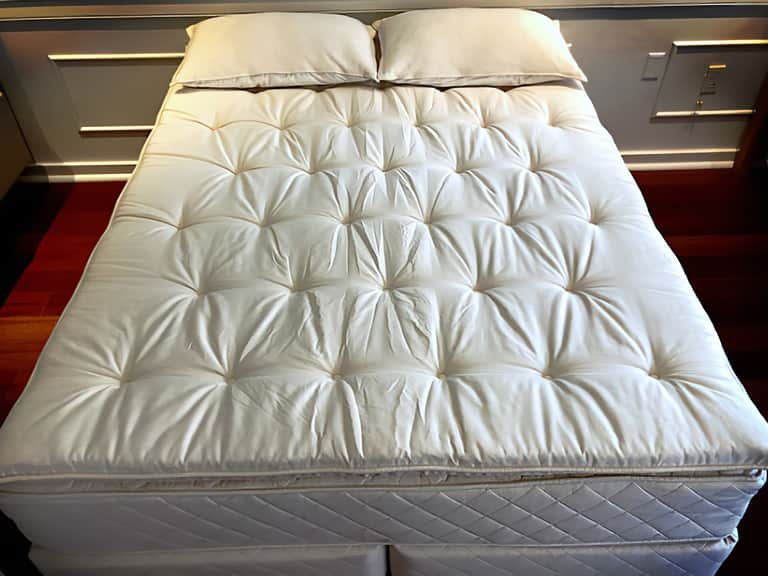
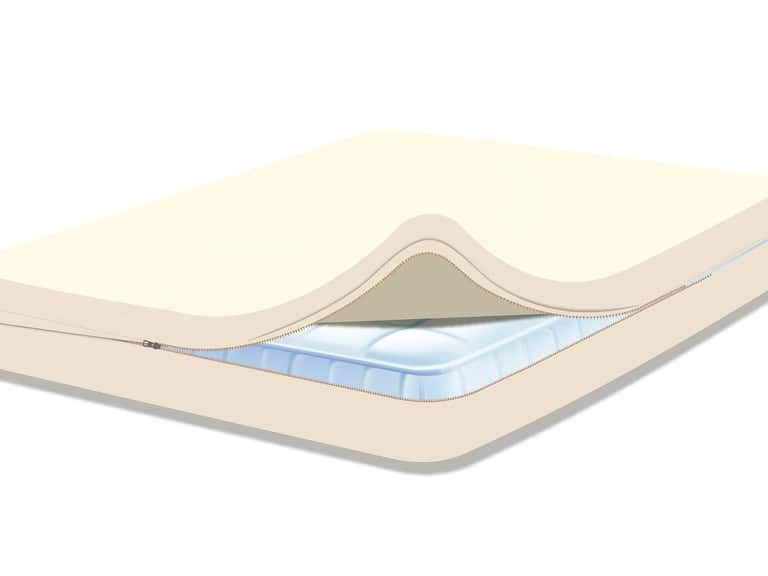
Think of a mattress as a small landscape of materials, each layer performing a different job. The core supplies the main support. A comfort layer may soften the feel or spread pressure. The cover encloses the structure, while a fire barrier may be incorporated to meet applicable flammability requirements. Seams, quilting, bonding agents, and surface treatments can add further materials.
For an informed assessment, ask for a component list that accounts for:
- Core: What provides the main support? Is it latex, foam, cotton batting, a spring system, or another material?
- Cushioning and padding: What sits between the core and the cover, and is it a distinct layer or blended into another component?
- Fire barrier: What material is used, and where is it positioned in the mattress?
- Cover and quilting: What are the fiber contents, including any filling, backing, or decorative stitching?
- Adhesives and binders: Are layers glued, bonded, or held together by another process? If so, what substances are used?
- Finishes and treatments: Has the fabric or any other component received a finish, coating, or treatment?
A disclosure that says “organic cotton cover” answers only one part of the question. It does not establish the composition of the core, the barrier, or the joining materials. Similarly, “wool-free” may describe the primary fill without clarifying every accessory component. Ask whether the claim applies to the whole mattress, including its internal layers and manufacturing inputs.
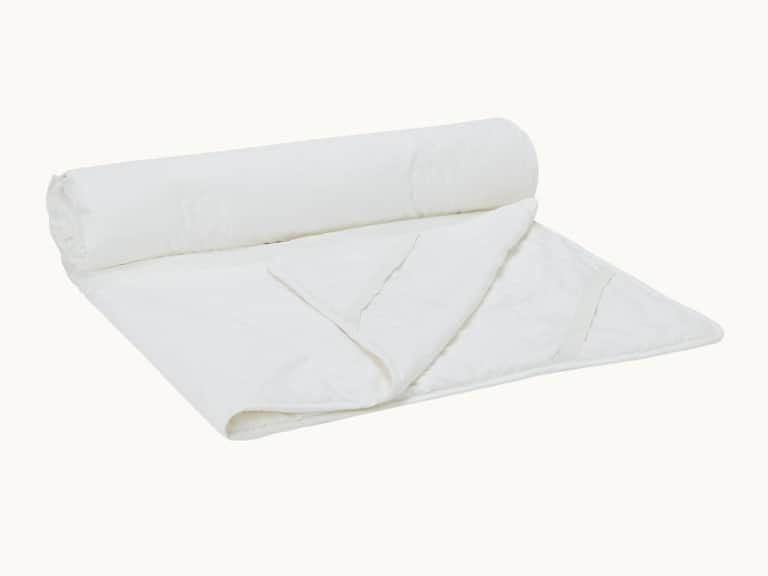
It is also useful to distinguish between a product’s construction and its optional accessories. A removable pad or protector may add fibers that are not part of the mattress itself. If a complete sleep setup matters to your household criteria, assess these items separately rather than assuming they share the mattress’s material profile.
What “wool-free” can—and cannot—tell you
Wool-free is a focused claim: it indicates that wool is absent under the scope defined by the manufacturer. It does not necessarily mean that a product is free of all animal-derived materials. A vegan assessment may also require checking for silk, down, leather, animal-based adhesives, or other materials whose origin is not apparent from a short specification.
The word “vegan” is not interchangeable with “organic.” Organic standards generally concern how certain fibers or agricultural materials are produced and processed. Vegan suitability concerns whether animal-derived materials or inputs are present according to a household’s criteria. These questions can overlap, but one label cannot answer both. An organic wool layer, for instance, remains wool; an organic cotton cover does not make every hidden component plant-based.
Even materials that sound straightforward can require clarification. “Natural latex” describes a material associated with rubber tree sap, but a product disclosure should say whether latex is natural, synthetic, blended, or certified to a specific standard. If a manufacturer uses the term “plant-based foam,” ask what percentage is plant-derived and what makes up the remainder. A marketing phrase alone does not identify the full formulation.
It helps to write down your own criteria before contacting a manufacturer. Some families mean no wool in any layer. Others want a product with no animal-derived material anywhere in the finished mattress, while also asking about processing aids or manufacturing inputs. The more specific the question, the more useful the answer is likely to be.
Understand the role of the fire barrier
Fire-safety requirements shape mattress design, including crib mattress construction. Manufacturers may use different approaches to meet the standards that apply to their products and markets. Wool is one material that may appear in some mattress designs, but it is not the only possible part of a fire barrier. A wool-free product therefore needs a clearly described alternative—not merely a general assurance that it is “chemical-free” or “naturally fire resistant.”
Ask the manufacturer to identify the barrier material by name and explain whether it is a separate layer, a fabric blend, or a treatment applied to another component. Clarify whether the statement applies to the full mattress, rather than only the cover. If the answer uses a broad term such as “rayon,” “cellulose,” or “fiber,” ask what the material is made from and whether any additional substances are used in its processing or bonding.
Fire-safety claims should be treated as technical information, not as a cue to assume that one material is inherently safer than another. A description that names a specific standard or test can help readers understand what was assessed, but it does not replace a complete ingredient disclosure. If you have questions about compliance or a product’s intended use, consult the manufacturer and relevant public safety guidance for your location.
Families should also avoid modifying a crib mattress or adding a non-approved layer in a way that could affect fit or intended use. For infants, follow the crib and mattress manufacturers’ instructions and current safe-sleep guidance from recognized health and safety authorities. Material preferences matter, but they should be considered alongside a firm, properly fitted sleep surface and the product’s stated use.
Evaluate organic claims carefully
“Organic” is meaningful only when readers know what material is certified, which standard applies, and whether the certification covers the component they care about. A mattress description may refer to organic cotton in the cover, organic latex in the core, or a certified textile used in one layer. Those are distinct claims. The word should not be assumed to cover all materials in the finished product unless the documentation says so.
Look for the exact name of the certification, the material or component within its scope, and a way to verify the claim. Textile standards such as GOTS apply to defined textile processing and supply-chain criteria; they do not by themselves establish that a complete mattress is vegan. Other certifications may address chemical testing or product safety rather than agricultural origin or animal-derived content. A certification mark is most informative when paired with a clear explanation of what it certifies.
Ask whether the certificate is current and whether it belongs to the manufacturer, the material supplier, or the finished product. If a company says that a mattress is certified organic, request the certificate or a precise description of the certified components. A supplier’s certification for one input should not be mistaken for certification of every layer in the final mattress.
There is a useful difference between a claim about a material and a claim about a whole product. “Made with certified organic cotton” identifies a component. “Certified organic mattress” may imply a broader scope, but the precise meaning depends on the certification and documentation. When the wording is unclear, ask for the certificate’s scope rather than trying to infer it from a logo or product title.
Read material disclosures like a map
A good product disclosure allows a reader to trace the mattress from outer fabric to inner core. It should name fibers and materials in concrete terms, distinguish between blends and single-material layers, and identify which components are certified. “Cotton,” for instance, is more useful than “natural fabric,” but details such as organic status, fabric construction, and any backing or coating may still matter.
Pay attention to wording that signals uncertainty or limited scope. Terms such as “may contain,” “made with,” “contains a percentage of,” and “free from added” are not necessarily misleading; they simply describe narrower claims. “Free from added flame retardants” does not tell you what the barrier itself is. “Contains plant-based foam” does not indicate whether the entire foam is plant-derived. The goal is to understand precisely what each phrase covers.
Build a simple comparison table while researching. Use one row for each product and columns for the core, cushioning, fire barrier, cover, adhesives, finishes, certification scope, and unresolved questions. Record the manufacturer’s wording rather than translating it into assumptions. A blank cell is useful information: it identifies a gap that needs follow-up.
Keep the product page, technical sheet, and any written manufacturer response together. Specifications can change, and product names sometimes remain the same while materials or sourcing details are updated. Dated documentation makes it easier to understand which version of a product you assessed.
Questions worth sending to the manufacturer
A concise, specific inquiry is often more effective than asking whether a mattress is “natural” or “safe.” Consider questions such as:
- Can you provide a complete list of materials in the core, cushioning, fire barrier, cover, quilting, and any backing?
- Does the mattress contain wool anywhere, including blended fibers, batting, or internal layers?
- Does it contain any other animal-derived materials, such as silk or down, or animal-derived adhesives or processing inputs?
- What exact material forms the fire barrier, and is it a separate layer or a treatment?
- Are any layers bonded together? If so, can you identify the adhesive or bonding method?
- Which materials are certified organic, and does the certification apply to the finished mattress or only specified components?
- Are material details available in a technical sheet or certificate that I can review?
- Have the materials or suppliers changed recently, and how can I identify the current product specification?
Clear answers should be specific enough to distinguish one component from another. If a representative responds with a general statement about the brand’s values, politely restate the precise question. If some information is confidential, ask whether the company can at least confirm the presence or absence of a material category, or provide a signed statement about the product’s composition.
Documentation has limits. A manufacturer’s answer can clarify the product as represented, but it does not independently verify every supply-chain claim. For a household with strict criteria, certification documents and written disclosures are more useful than verbal assurances alone. If the available information remains incomplete, it is reasonable to treat the material profile as unconfirmed rather than filling in missing details optimistically.
Plant-based and non-wool materials: compare function as well as origin
Wool-free construction may use a range of materials. Organic cotton can appear as a cover, batting, or quilted layer. Latex can provide a resilient core or comfort layer. Other products may use synthetic foam, plant-derived blends, cellulose-based fibers, or engineered barrier fabrics. Each has different properties, sourcing questions, care requirements, and documentation needs.
Material origin alone does not tell you how a mattress will feel or perform. A family comparing two wool-free crib mattresses should consider the intended firmness, fit, surface construction, ease of care, and the manufacturer’s safety instructions, alongside its material criteria. A thin cotton layer and a dense latex core have different jobs; neither is a direct substitute for the other simply because both may be described as natural.
Likewise, “plant-based” is not a complete environmental assessment. A product can contain a plant-derived ingredient and still include substantial synthetic material. Manufacturing, durability, transport, and end-of-life options also influence environmental impact. When a company makes a sustainability claim, look for measurable details and a defined scope rather than treating a single ingredient as proof of a product’s overall footprint.
For readers comparing construction, a stated material list is more useful than a broad contrast between “natural” and “synthetic.” It lets you investigate the specific material and decide whether its origin, performance, and maintenance fit your priorities. It also makes it possible to identify trade-offs without assuming that one category is automatically preferable in every respect.
Keep the crib’s fit and care in view
Material research should not eclipse the practical details of a crib mattress. Check the mattress dimensions against the crib manufacturer’s instructions, and follow the stated care and use guidance. A waterproof membrane, removable cover, or washable component can affect maintenance, but these features should be described separately from the mattress’s underlying materials. Confirm whether a cover is removable and whether washing is permitted before relying on that feature.
For infants, avoid adding loose toppers, pillows, or unapproved layers to change the feel of the sleep surface. A mattress protector should fit securely and be intended for the product and crib in use. The purpose of a material review is to choose among suitable products, not to alter a sleep surface in a way that conflicts with safety instructions.
Families with a particular health concern, allergy, or sensitivity should discuss it with a qualified health professional and ask the manufacturer for relevant technical details. “Hypoallergenic” is a broad marketing term and should not be treated as a guarantee that a product will prevent a reaction. Specific information about fibers, coatings, and care is more actionable.
A practical wool-free mattress checklist
Before deciding whether an organic crib mattress meets your household’s requirements, check each item below:
- Whole-product scope: Confirm that “wool-free” applies to every layer, not just the cover or primary fill.
- Other animal materials: Ask about silk, down, and any animal-derived adhesives, binders, or processing inputs relevant to your criteria.
- Named core and cushioning: Record the exact materials and whether any are blends.
- Identified fire barrier: Find out what it is made from and how it is incorporated.
- Complete cover details: Check the fabric, backing, quilting, coatings, and finishes.
- Certification scope: Match each certification to the material or product it actually covers.
- Written documentation: Save a current specification sheet, certificate, or manufacturer response.
- Use and care: Follow the crib and mattress instructions, including fit, cleaning, and recommended use.
- Open questions: Mark unknown details as unresolved instead of treating them as confirmed.
This checklist is not a scoring system. A product either meets your stated criteria or it does not, and different households may set those criteria differently. The value lies in making the decision transparent: a reader can see which claims are documented, which rely on interpretation, and which still need an answer.
A more transparent way to choose
Choosing a wool-free organic crib mattress is an exercise in reading across layers. Organic status, vegan suitability, fire-safety compliance, and product performance are related questions, but they are not the same question. A certification can substantiate a defined claim; it cannot stand in for a full materials inventory. A wool-free statement can be useful; it does not necessarily establish that every component is animal-free.
Begin with your household’s criteria, then look for exact material names and documentation covering the complete mattress. Investigate the core, fire barrier, adhesives, finishes, and cover with equal care. Where a description is incomplete, ask a direct question and keep the response. If the answer remains vague, you have learned something important about the limits of the available information.
In the nursery, the mattress is both a practical object and a chain of decisions—about fibers, manufacturing, standards, and use. Clear disclosures help families make those decisions without confusing a green-sounding label for a full explanation. The best evaluation is not the one with the most reassuring adjectives, but the one that makes every relevant layer easier to understand.
Frequently asked questions
Does an organic crib mattress automatically qualify as vegan?
No. Organic claims concern specified materials or production criteria, while vegan suitability concerns the presence of animal-derived materials under the household’s definition. Check the full component list, including the core, barrier, cover, adhesives, and finishes.
Does wool-free mean there are no animal-derived materials?
Not necessarily. Wool-free addresses wool, but may not address silk, down, or animal-derived processing inputs and adhesives. Ask whether the claim applies to the complete mattress and clarify any other materials that matter to your criteria.
What is the most important material detail to verify?
There is no single layer that answers every question. Request a full materials disclosure, paying particular attention to the core, fire barrier, bonding materials, and any component described only with a broad marketing term.
Can a mattress be organic but still use synthetic materials?
Yes. A certification may apply to particular fibers or components rather than every part of the finished product. Read the certification scope and product specification together to understand which materials are covered.
What should I do if the manufacturer will not disclose a material?
Ask whether the company can confirm the material’s category, provide a relevant certificate, or issue a written statement that addresses your specific concern. If the information remains unavailable, consider the composition unverified rather than assuming the undisclosed component meets your requirements.